JP Morgan Chase
Redesigning internal tooling at JP Morgan Chase, reducing average task completion time for critical operational users driving deals from closed to live on offer walls.

The Challenge
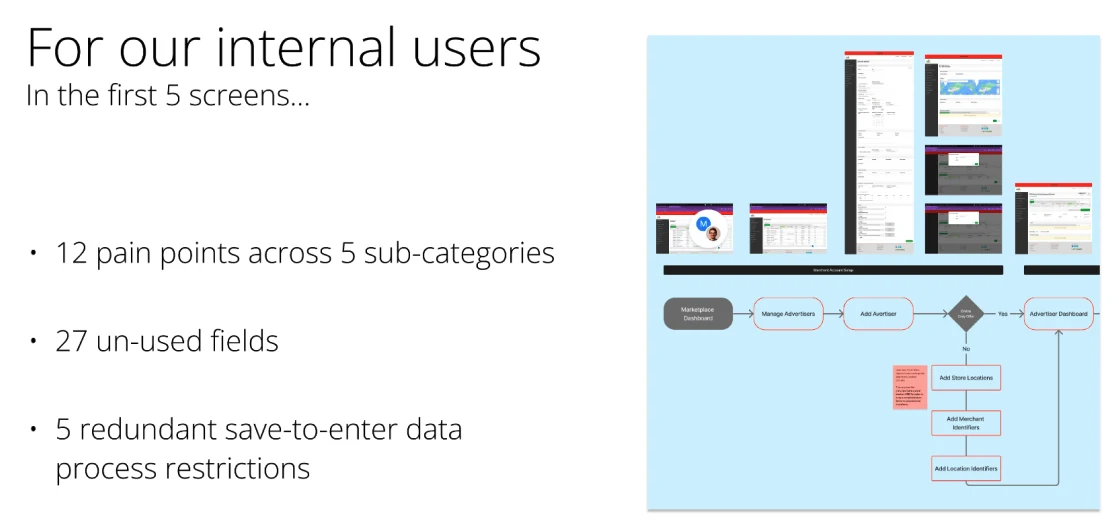
JP Morgan Chase's operations teams relied on a suite of internal tools built over a decade of incremental additions. The tools were functional but fragmented — operators regularly navigated between several different applications to complete a single workflow. Tasks routinely took far longer than they should have — simple processes stretched across multiple systems and manual steps.
Discovery
I embedded with three operations teams across different business lines for two weeks each. We documented 40+ workflows end-to-end, mapped tool dependencies, and conducted time-motion studies to identify the highest-friction touchpoints.
Core problems:
- Context switching — operators toggled between several apps, re-entering the same data across systems
- No unified search — finding a customer record required knowing which system held which data
- Alert fatigue — operators received a high daily volume of notifications with no prioritization, leading to critical items being missed
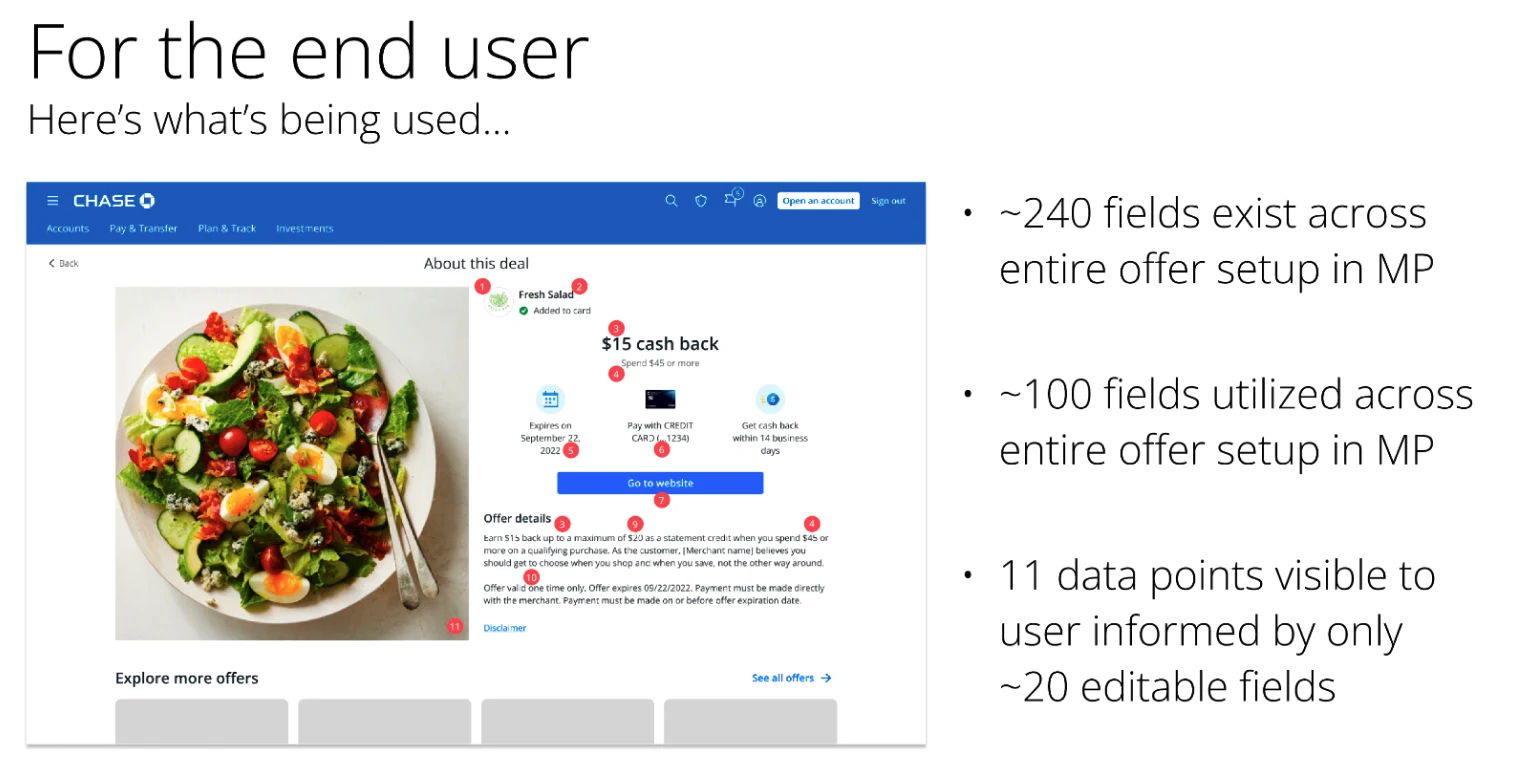
"I spend more time finding information than actually acting on it. The tools fight me instead of helping me." — Senior Operations Analyst, 8 years tenure
Framing the Strategy
Rather than redesigning each tool individually, we proposed a unified operations workspace — a single interface that orchestrates existing systems behind a coherent experience layer.
Design principles:
- One workspace, many systems — abstract system boundaries away from the operator
- Task-first navigation — organize around what operators do, not which system holds the data
- Proactive intelligence — surface the right information before operators have to search for it
SERVICE BLUEPRINT · OPS WORKFLOW MAPPING
BLUEPRINT OUTCOME
Identified 4 critical handoff failures between merchant submission and ops processing.
Mapped 7 redundant approval steps that could be collapsed into role-aware automation.
Surfaced reporting gap: ops teams had no visibility into campaign performance until post-mortem.
OPS TOOLING · SERVICE BLUEPRINT · LEADING U.S. BANK · 2024

The Solution
TWO-TRACK DELIVERY · QUICK WINS + FUTURE STATE
TRACK 01 · QUICK WINS · 0–60 DAYS
NO BACKEND REQUIRED
TRACK 02 · DESIGN PROVOCATIONS · FUTURE STATE
ALIGN BEFORE ROADMAP COMMITS
OPS TOOLING · TWO-TRACK DELIVERY APPROACH · 2024
Results
Reflection
This project taught me that the best internal tools are invisible infrastructure. Operators don't want to think about which system they're in — they want to complete their work. By treating the system boundaries as an implementation detail rather than a user-facing concept, we gave critical operational users hours of working time back.
The hardest part wasn't the design — it was the organizational change management. Consolidating several tools meant working with several different teams, each with their own roadmap and priorities. Design leadership here meant building consensus through shared outcomes, not mandating a solution.